Let’s be honest for a second. Thinking about insurance doesn’t spark joy. It’s not like planning a vacation or buying something new. It makes us think of “what ifs” and worst-case scenarios. For years, I saw it as a confusing, expensive chore—just another line item in the budget.
Then, my friend’s family had a serious car accident. Suddenly, words like “deductible,” “coverage limits,” and “disability benefits” weren’t just jargon on a bill. They were the difference between crushing financial stress and having the space to heal. That experience was my wake-up call. Insurance isn’t about paperwork; it’s about protection and peace of mind. It’s a safety net for the people and life you’ve built.
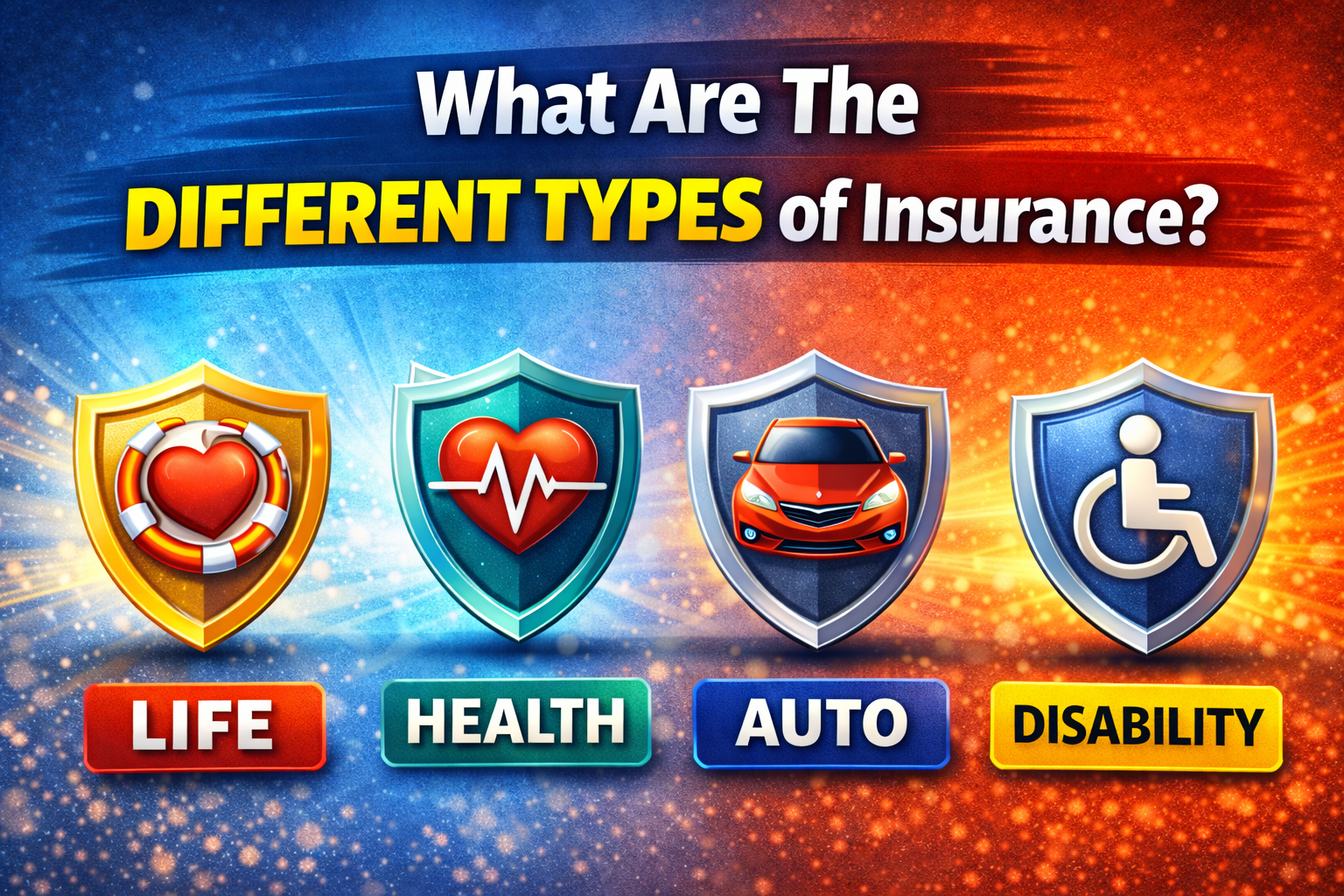
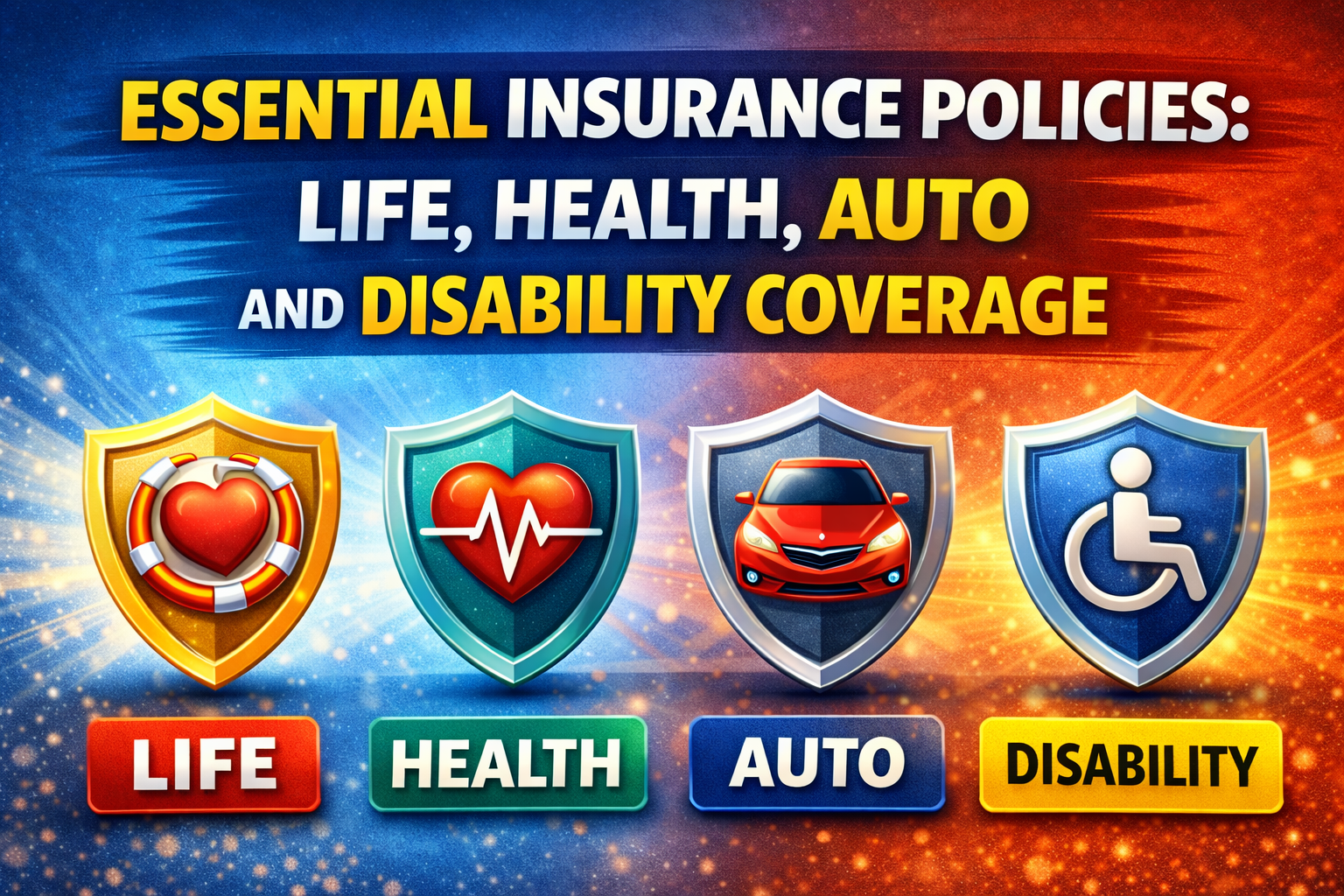
Today, I want to walk you through the four essential types of insurance that form the foundation of a solid financial plan. We’ll talk about them in plain English, from one person to another.
1. Life Insurance: Your Love, Written Into a Plan
This is the one that feels the most emotional. Life insurance isn’t for you; it’s for the people you love.
- What it is: A contract where you pay premiums, and the insurance company pays a sum of money to your chosen beneficiaries (like your spouse, kids, or a family member) if you pass away.
- Why it’s essential: It replaces your income, pays off debts like a mortgage, funds your children’s education, and covers final expenses. It’s a final act of care, ensuring your family isn’t burdened financially while they grieve.
- Simple Breakdown:
- Term Life: Affordable and straightforward. You’re covered for a specific “term” (e.g., 20 or 30 years). It’s perfect for covering the years you have a mortgage or young kids at home.
- Permanent Life (like Whole Life): More expensive, but it covers your entire life and builds cash value. It’s more complex but can be part of a long-term financial strategy.
Ask yourself: Would anyone struggle to pay bills without my income? If the answer is yes, you need to look into life insurance.
2. Health Insurance: Your Shield Against the Unpredictable
Your health is your greatest asset. But getting sick or injured is also one of life’s biggest financial risks. A single hospital stay can cost more than a car.
- What it is: A policy that helps pay for medical expenses—from doctor visits and prescriptions to surgeries and hospital stays.
- Why it’s essential: It protects your savings from being wiped out by medical debt. It also gives you access to preventive care (like yearly check-ups and vaccines) to help you stay healthy.
- Key terms made simple:
- Premium: The monthly fee you pay.
- Deductible: The amount you pay out-of-pocket before your insurance starts to chip in.
- Copay/Coinsurance: Your share of the costs for a service (like $20 for a doctor visit).
Having good health insurance lets you focus on getting better, not on the mountain of bills. It’s a non-negotiable form of self-care.
3. Auto Insurance: More Than Just a Legal Requirement
In most places, you can’t legally drive without it. But it’s so much more than a ticket-avoidance tool.
- What it is: A contract that protects you from financial loss if you have an accident or your car is stolen or damaged.
- Why it’s essential: It covers the other driver’s car and medical bills if you’re at fault (liability coverage), and it can cover repairs to your own car (collision & comprehensive coverage). Without it, you could be personally sued for hundreds of thousands of dollars.
- The emotional bit: Getting into a crash is scary and stressful enough. Dealing with it without insurance is a nightmare. Good coverage means you have a guide and helper (your insurance agent) in that chaotic moment.
Don’t just buy the state minimum. Make sure you have enough liability coverage to protect your home and savings.
4. Disability Insurance: Protecting Your Most Important Asset—You
This is the most overlooked but arguably the most crucial policy for anyone who relies on their income to live. What’s your ability to earn an income worth?
- What it is: It replaces a portion of your income if you become too sick or injured to work for an extended period.
- Why it’s essential: Your odds of becoming disabled before retirement are higher than you think. An illness like cancer, a bad back injury, or severe depression can leave you unable to work for months or years. Savings can disappear frighteningly fast. Disability insurance acts as a paycheck protector.
- The mindset shift: We insure our cars, our homes, our phones. But what about the very thing that pays for all of that? Your income. Disability insurance says, “I am valuable, and my family’s lifestyle is worth protecting.”
Bringing It All Together: Your Safety Net
Viewing these four policies—Life, Health, Auto, and Disability—as a connected safety net changed everything for me. They aren’t isolated products. They work together to protect the life you’re building.
- Health insurance pays the hospital bill.
- Disability insurance replaces your income while you recover.
- If the worst happens, life insurance provides for your family.
- And auto insurance handles the fender-benders and major accidents along the way.
Getting started doesn’t have to be hard:
- Talk to a licensed agent. A good, honest agent will explain things without pressure and help you find the right coverage for your budget.
- Start where you are. If getting all four at once isn’t possible, prioritize. Usually, Health > Auto > Disability > Life is a good order, but your personal situation will guide you.
- Review your policies yearly. Life changes—you get married, have a kid, buy a house, change jobs. Your insurance should change with you.
Investing in these essential policies is an act of profound responsibility and love—for yourself and for those who depend on you. It’s the quiet, steady foundation that lets you sleep well at night and dream boldly for the future, knowing you’ve built a floor that won’t fall out from under you.